
Let’s build your chatbot today!
Launch a no-code WotNot agent and reclaim your hours.
*Takes you to quick 2-step signup.
Look, I get it.
You landed on Voiceflow. It looked slick. The demo was smooth. The drag-and-drop canvas made building agents feel… almost too easy.
You thought: This is it.
But after some time, issues start to surface.
Conversations don’t always log the way you expect. Integrations break in small ways, like variables not passing through properly or APIs returning inconsistent responses.
Also, voice agents can feel unreliable after a few turns, especially when latency or speech recognition kicks in at the wrong time.
And then there’s pricing.
Credits get consumed faster than you planned (especially with newer models).
It’s not just you, either. These are common friction points teams run into when they move from prototyping to production.
I’ve been in touch with folks who previously used Voiceflow, and know what it needs to be a good alternative.
So… In this post, I’ll walk you through Voiceflow alternatives that are actually worth considering. Plus, I’ll share what they’re genuinely good at, where they fall short, and who they’re best suited for.
TL;DR – Quick Overview of Voiceflow Alternatives
Tool | Best For | Entry Price |
Fast-moving teams that want no-code chatbots for lead gen + support without heavy setup | $29/month | |
Enterprises needing full control, on-prem deployment, and custom NLU pipelines | Custom | |
Teams building real-time voice agents where latency actually matters | Custom | |
Dev teams that want a mix of visual builder + code-level control | Free tier, ~$99/month | |
High-volume teams doing outbound voice calls at scale with deep customization | ~$0.09/min | |
Companies already using Intercom that want plug-and-play AI support for automation | $0.99/resolution | |
Teams exploring AI agents beyond chat (ops, workflows, internal automation) | Starts free | |
Large support teams with complex backend workflows + high ticket volume | $95K+/year |
In-Depth Comparison of Voiceflow Alternatives (I've Dug Into Each One)
Now let’s break these down properly.
I didn’t just skim landing pages or copy feature lists. I looked at how these platforms behave once you actually build an AI agent or a chatbot (with edge cases).
Each of these tools solves a different part of the problem. Some are great for getting started fast. Others are built for scale, control, or voice-heavy use cases.
So instead of trying to crown a “winner,” I’ll break down:
What each tool is genuinely good at
Where it starts to fall apart
And who it actually makes sense for
1. WotNot
If Voiceflow is built for conversation designers who want to prototype, WotNot is built for businesses that want to actually run chatbots at scale without babysitting developers.
The positioning is simple: no code, no headaches, no surprise invoices. And honestly? It delivers on that promise more consistently than most tools in this space.
It has a drag-and-drop builder with 40+ chat elements, which is genuinely usable.
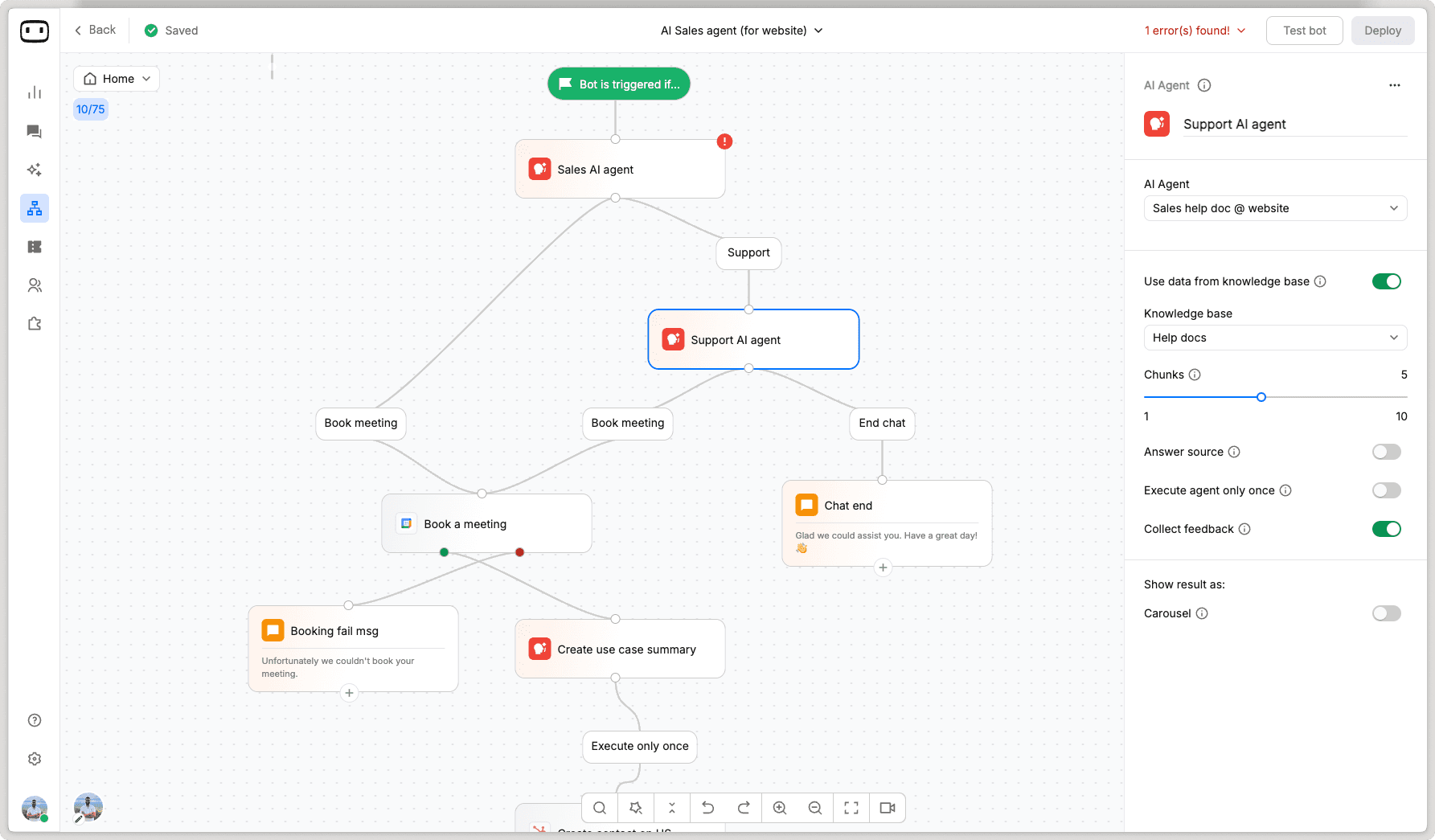
You can wire up lead gen flows, FAQ bots, appointment bookings, and live chat handovers without once touching a line of code.
It also does outbound messaging across WhatsApp, SMS, and website widgets. And this is something Voiceflow doesn't really do well.
Where it really stands out is the done-for-you support layer.
If you don’t want to spend weeks figuring out conversation design, there’s actual human help to build and optimize your bot. That alone makes a difference for non-technical teams.
Best for: Marketing and support teams in real estate, healthcare, SaaS, or e-commerce who want a production-ready no-code chatbot without months of setup.
Pricing: Free tier (100 chats), Starter $99/month, Premium $299/month, Ultimate $899/month.
Start building, not just reading
Build AI chatbots and agents with WotNot and see how easily they work in real conversations.

Start building, not just reading
Build AI chatbots and agents with WotNot and see how easily they work in real conversations.
Start building, not just reading
Build AI chatbots and agents with WotNot and see how easily they work in real conversations.

2. Rasa
[ Disclaimer: This is a developer-first platform ]
Rasa is built for engineering teams and enterprises that care about control, data ownership, and predictable behavior. No drag-and-drop builders.
What sets Rasa apart is its CALM (Conversational AI with Language Models) architecture.
Instead of letting an LLM handle everything, Rasa splits responsibilities:
The LLM interprets user intent
The system logic decides what actually happens next
That separation matters. Why? Because it reduces hallucinations and makes behavior far more deterministic. This is especially important in industries like finance or healthcare.
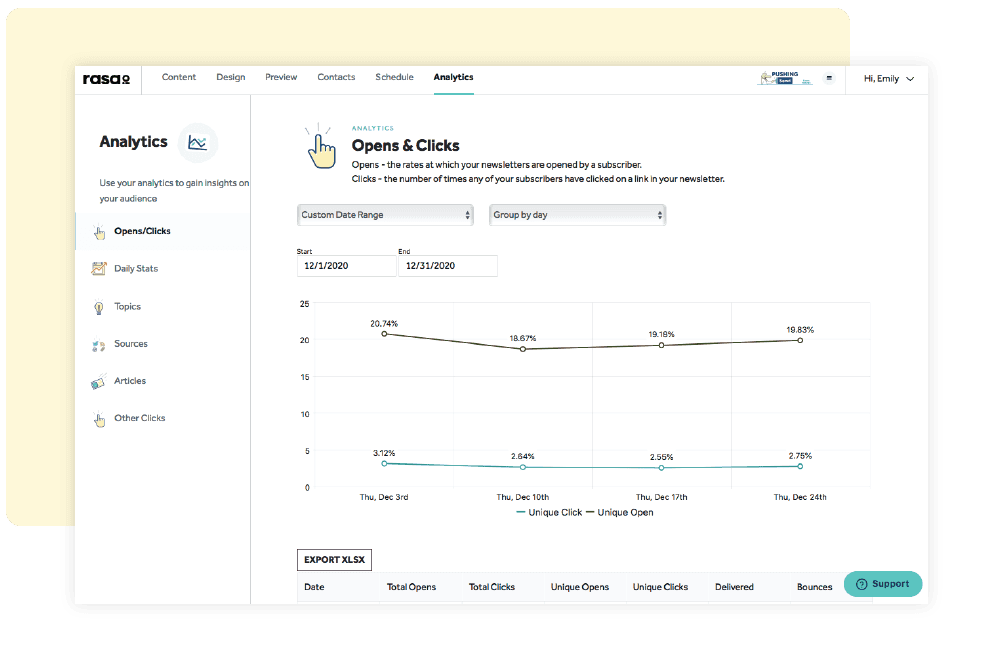
It’s also fully self-hosted from the start. No gated features, no enterprise upsell, just to control your own data.
The catch? You need developers. Python developers, specifically.
The learning curve is steep, and there's no simple way around it.
If your team is mostly marketers or product managers, Rasa will feel like trying to drive a Formula 1 car to the grocery store.
Best for: Enterprise teams in regulated industries (banking, healthcare, telco) who need deterministic AI behavior, data sovereignty, and full audit trails.
Pricing: Custom enterprise pricing based on volume.
3. Synthflow
Here’s the honest thing about Voiceflow and voice: it’s not really a voice platform.
It’s a conversation design tool that connects to voice via providers like telephony APIs. Which means every added layer introduces more latency, more points of failure, and more complexity to manage.
Synthflow is the exact opposite of this.
It’s built as a full-stack voice platform that handles speech synthesis, call handling, and conversation logic in a single system.
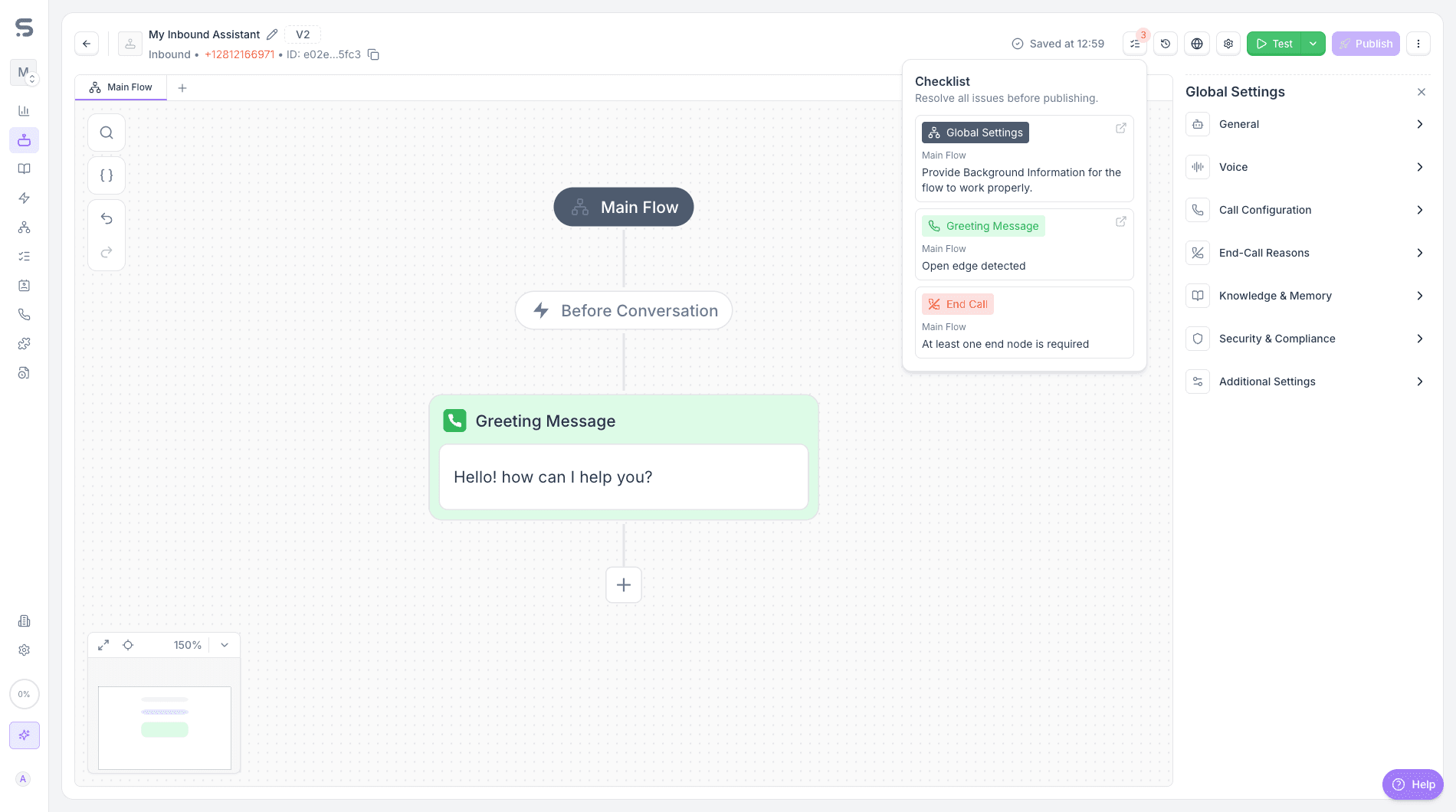
So instead of connecting multiple vendors together, you’re working with a single, tightly integrated stack.
Due to this, voice agents feel more responsive. Conversations flow more naturally. And you don’t get that awkward “did the call just drop?” pause that breaks user trust.
When teams compare voice setups side by side, the consistent edge for Synthflow comes down to:
More natural-sounding voices
Lower response latency
Fewer integration headaches
It's also HIPAA and SOC 2 compliant, and supports both inbound and outbound call flows.
What’s surprising is the no-code interface. Most voice AI tools are super technical, but Synthflow makes it accessible enough for non-tech folks to configure and iterate without constant engineering support.
The downside: pricing ain’t transparent, and it's built for teams who are ready to invest in voice infrastructure, not experiment with it.
Best for: Businesses that need production-grade voice agents, like call centers, healthcare intake, sales outreach, and appointment scheduling.
Pricing: Pay-as-you-go model.
4. Botpress
Botpress sits in that middle ground that most teams are actually looking for.
Why? Because it’s not fully no-code, and it’s not fully developer-heavy. But it is flexible enough to handle both. And that’s why people chose it.
If Voiceflow and WotNot lean toward structured conversation design, Botpress leans toward LLM-first, AI-native chatbot building. It comes with the option to drop into code when you need more control.

The interface is visual, but under the hood, it’s far more extensible than most no-code tools. You can build flows, connect APIs, and layer in custom logic without hitting a hard ceiling too early.
Where it stands out is how it handles AI-driven conversations.
Instead of rigid flows, Botpress lets you work with more dynamic interactions using LLMs to interpret user intent while still giving you guardrails to control behavior.
It’s a better fit for teams that don’t want to script every possible path.
It also supports deployment across web, WhatsApp, and other channels, with a developer-friendly ecosystem if you need to go deeper.
The best part? It's open-source. That means you can self-host if you want full data control (available on Enterprise), and you're not locked into whatever Botpress decides to charge you next year.
The only issue is that non-technical users will hit a wall faster than with pure no-code tools.
Best for: SaaS companies and startups that want more control than pure no-code, have at least one developer, and don't need native voice telephony.
Pricing:
Free tier available
Paid plans start around $79–$89/month + AI usage costs
Higher tiers scale based on usage, seats, and features
5. Bland AI
Bland AI is built for one thing: handling phone calls at scale… like it can handle thousands of calls, support outbound campaigns, and give teams control over call flows, logic, and integrations.
If most tools in this list are about building conversational experiences, Bland is about automating high-volume voice operations. That includes sales calls, follow-ups, support, and collections.
Their core idea is simple: give you a fully programmable voice agent that can make and receive calls, plug into your systems, and run workflows reliably.
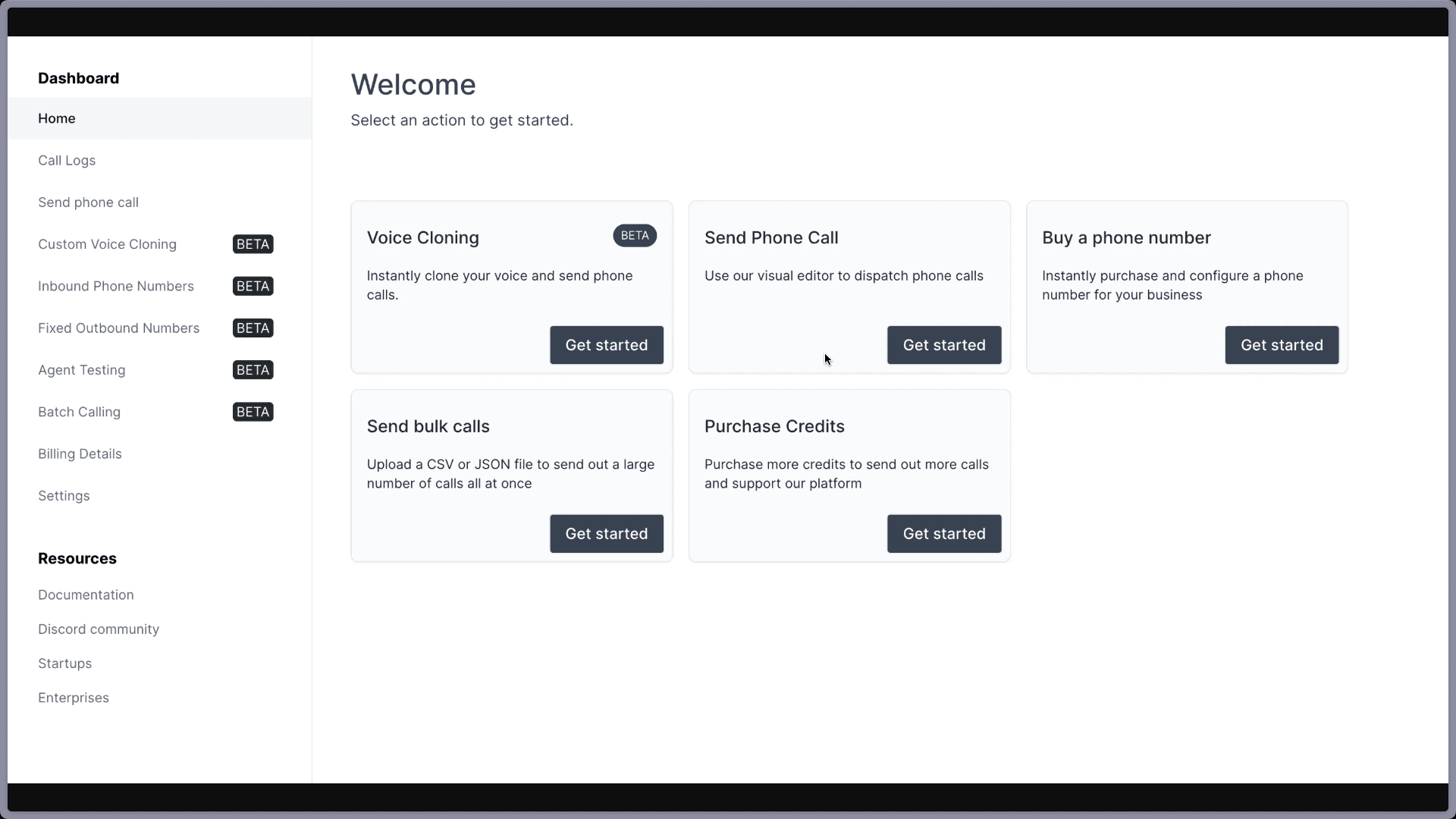
What makes Bland interesting compared to generic voice platforms is "Conversational Pathways". A feature that lets you blend scripted logic with generative AI. So you get structure and brand consistency where you need it, but the bot can handle off-script moments gracefully instead of derailing entirely.
But there’s a trade-off.
This is still a developer-first platform. You’re not getting a polished, no-code experience like WotNot or even Synthflow.
It's powerful but not fast to deploy. The average response latency (~800ms) is also a step behind the very best voice platforms. And pricing with extra fees can create budget surprises.
Best for: Enterprise teams and call centers running high-volume outbound campaigns, identity verification flows, or compliance-heavy voice workflows where you need audit trails and custom logic.
Pricing:
Plan | Price | Daily Cap | Hourly Cap | Concurrency | Voice Clones |
Start | Free | 100 calls | 100 calls | 10 calls | 1 |
Build | $299 | 2,000 calls | 1,000 calls | 50 calls | 5 |
Scale | $499 | 5,000 calls | 1,000 calls | 100 calls | 15 |
Enterprise | Contact Us | Unlimited | Unlimited | Unlimited | Unlimited |
Note: In addition to the subscription fees, you need to pay for each minute of connected call.
6. Intercom Fin
Intercom Fin is one of those tools where the value proposition is almost embarrassingly clear: if you're already using Intercom for customer support, Fin is the fastest path to automating 50%+ of your ticket volume.
No migration, no new platform to learn, no six-week implementation project.
The $0.99 per resolution pricing model is genuinely interesting. You only pay when the bot actually solves a problem. That's a meaningful shift from "pay for conversations" to "pay for outcomes".
And it creates a much more honest incentive structure than most chatbot platforms.
The quality is there too.
Fin uses your existing help center content to generate contextual, multi-turn responses that actually resolve issues rather than bouncing users around in a loop.

Where it stands out is time-to-value.
Most tools on this list require setup, testing, and iteration before they’re production-ready. Fin skips that phase almost entirely. If your support content is solid, you can start seeing deflection within days.
The friction points: Fin is really only a strong option if you're on Intercom. Using it as a standalone product works, but you lose a lot of the native context and workflow richness.
The per-resolution cost also scales linearly. There are no volume discounts, which can get expensive fast for large support operations. And multilingual performance outside of English is reportedly still catching up.
If Intercom looks promising but you want something better, then check out these Intercom alternatives.
Best for: SaaS and tech companies already using Intercom who want fast, measurable AI support and automation without adding another platform.
Pricing: $0.99/resolved conversation (minimum 50/month). Full Intercom helpdesk adds $39/seat/month.
7. Lindy
Lindy is what happens when you stop thinking about chatbots and start thinking about AI agents that execute tasks.
Instead of just replying to users, Lindy agents can:
send emails
update CRMs
schedule meetings
trigger workflows across tools
In other words, the conversation is just the interface. The real value is what happens after.
The setup is surprisingly simple for what it does. You define workflows, connect your tools, and let the agent handle execution.
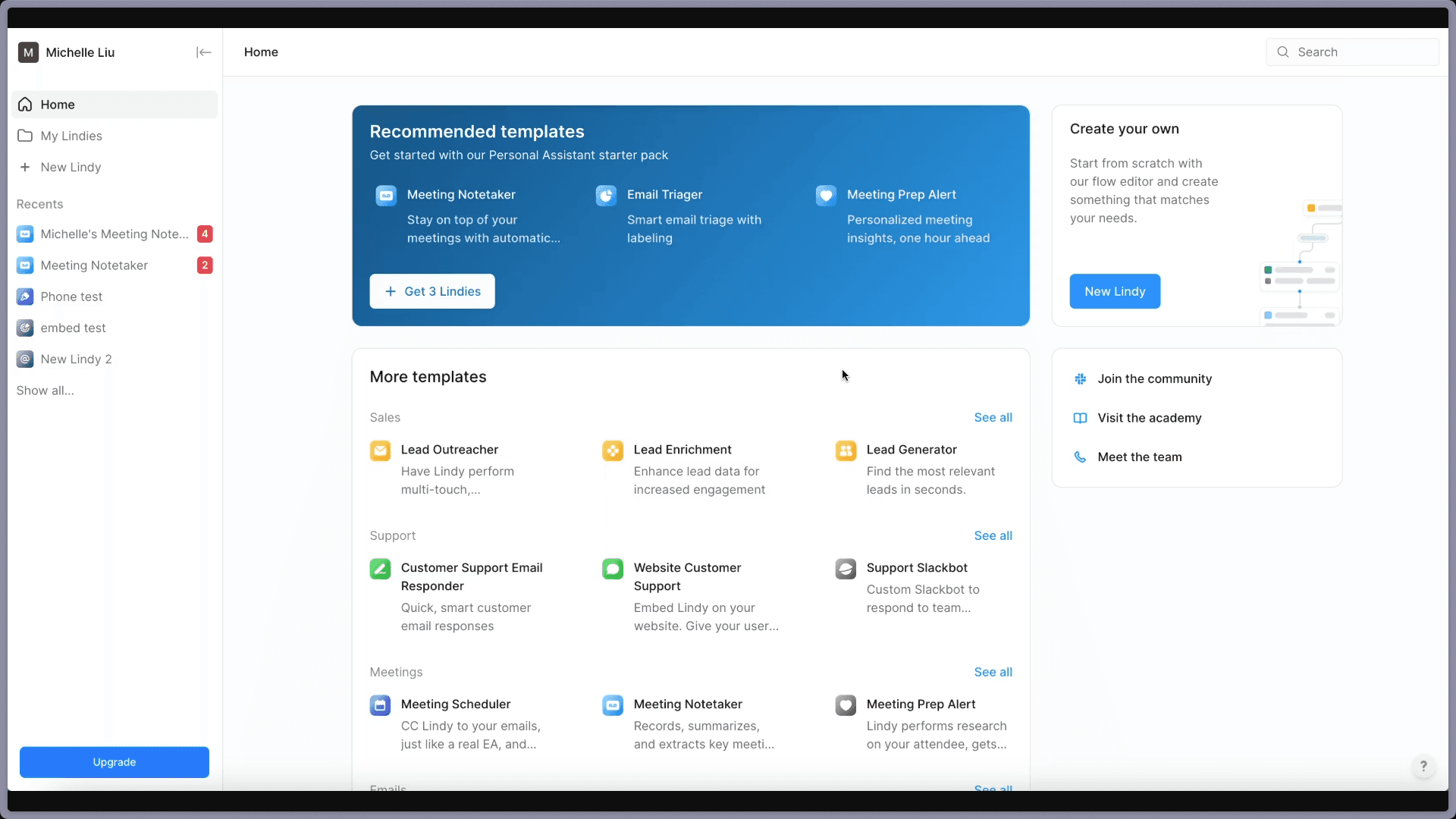
In fact, it’s closer to automation platforms like Zapier… but with an AI layer that can make decisions along the way.
That makes it powerful for internal operations and cross-functional workflows, not just customer-facing chat.
The best part? It has a solid compliance stack, which includes GDPR, HIPAA, SOC 2, and PIPEDA.
One thing that Lindy’s reviews consistently flag is its pricing. You don't always know how many credits a complex workflow will consume until it's consumed. Also, some users say that it has terrible customer support.
Best for: Teams that need AI automation across multiple business functions (support, sales, ops) and want one platform to orchestrate it all, not just a chatbot.
Pricing: Free plan available; paid plans start at $50 per month, but credit consumption can escalate.
8. Decagon
Decagon is an AI concierge platform which is built for enterprise support teams dealing with high ticket volume, complex workflows, and deeply integrated systems.
You can create fully autonomous AI agents that don't just answer questions but also connect to your backend systems and do things.
It can process a refund, verify an identity, and even update an order. Basically, the things that normally require a human in the loop.
The way they make this work is through "Agent Operating Procedures" (AOPs). It is a set of natural language rules that compile into code.
The platform also has Watchtower, a real-time QA monitoring system that flags when the AI does something unexpected.
Now for the honest part: Decagon’s pricing is a big issue. They don’t have any public pricing, but their custom plans range from $40,000 to $90,000. Which is a bit too much.
But it is safe to say that Decagon has what it takes and is quite suited for enterprises.
And some users on G2 note that the "not a black box" promise doesn't always match reality in day-to-day use. Its audit trails lack depth, and tracing why the AI made a specific decision can be frustratingly difficult.
Note: Its usual deployment timeline is around 2 months (Source ~ G2). Which is a bit much.
Best for: Well-funded enterprises in fintech, retail, and tech with complex, multi-system customer support operations who need autonomous AI that can take action, not just respond.
User Ratings: G2 — highly rated by enterprise users; strong praise for deployment speed and partnership model.
How does Decagon perform against Voiceflow? They don't really compete. Voiceflow is for building conversational experiences. Decagon is for replacing large swaths of your customer support operation with autonomous AI. Different problems, different scale, different budget.
Pricing: Custom, resolution-based pricing like Intercom. But according to reports, the cost for enterprise contracts usually starts around $90K/year, with a redline threshold around $50K.
Let’s build your chatbot today!
Launch a no-code WotNot agent and reclaim your hours.
Let’s build your chatbot today!
Launch a no-code WotNot agent and reclaim your hours.
Like Voiceflow, But Better!
Here's the thing about Voiceflow that nobody really says out loud: it's a great design tool that got sold as a deployment tool, and a lot of people are paying for that gap.
If you primarily want to prototype conversations and collaborate with a team on conversation design, Voiceflow is fine. It's genuinely good at that.
But if you want to actually deploy AI agents that work in production the alternatives above do it better.
The right pick depends on your situation:
For no-code chatbots across chat channels, WotNot and Botpress are strong picks. WotNot if you want full business-readiness out of the box; Botpress if you want more technical flexibility.
For voice AI specifically, Synthflow or WotNot works. Bland AI if you're running high-volume outbound. Rasa Voice if you're in a regulated enterprise environment.
For customer support automation, Intercom Fin if you're on Intercom, Decagon if you're a well-funded enterprise, and Lindy if you want automation that goes beyond just the support inbox.
For enterprise control and data sovereignty, Rasa.
Pick based on your actual use case, not the prettiest demo. The best tool is the one that's still working six months after you deploy it.
FAQs
FAQs
FAQs
What is the biggest limitation of Voiceflow?
Voiceflow is strong for prototyping and conversation design, but it isn't a native voice platform. It relies on third-party providers like Twilio for telephony, adding latency, cost, and integration complexity. Its per-editor pricing model also becomes expensive quickly for larger teams.
Which Voiceflow alternative is best for voice agents?
Is there a free alternative to Voiceflow?
Which alternative is best for non-technical users?
What if I need enterprise-grade AI customer support?
ABOUT AUTHOR

Hardik Makadia
Co-founder & CEO, WotNot
Hardik leads the company with a focus on sales, innovation, and customer-centric solutions. Passionate about problem-solving, he drives business growth by delivering impactful and scalable solutions for clients.

Start building your chatbots today!
Curious to know how WotNot can help you? Let’s talk.
Start building your chatbots today!
Curious to know how WotNot can help you? Let’s talk.