
Let’s build your chatbot today!
Launch a no-code WotNot agent and reclaim your hours.
*Takes you to quick 2-step signup.
A study by Meta with Bain & Company reveals that 90% of surveyed non-savvy digital users prefer to connect with businesses on conversational platforms. But they’ll abandon their purchase if they have to download a new app to do that.
But everyone has Facebook, right?
Which is why businesses have become available to potential customers on Facebook through chatbots.
Facebook Messenger chatbots are everywhere. And the businesses using them are not the ones with massive engineering teams. They are small support teams, lean marketing agencies, and solo founders who got tired of losing leads at odd hours.
I have seen this happen all over the industry, and it's not because it's a high-tech move.
Businesses with a solid presence on Facebook keep pulling ahead in the race simply because it's the largest social media platform in the world.
This guide covers what a Messenger chatbot is, why it matters, the best platforms to build one, and a step-by-step walkthrough to get yours.
What Is a Facebook Messenger Chatbot?
A Facebook Messenger chatbot is an automated tool that sits inside your business's Messenger inbox. It handles customer conversations without needing any human intervention.
It can answer questions, qualify leads, recommend products, book appointments, and hand off to a live agent when the conversation gets complex.
These chatbots come in two forms.
Rule-based bots follow pre-built conversation flows: the user clicks a button, and the bot responds with the next step.
AI-powered bots go further. They use natural language processing to understand what the customer is actually asking and respond dynamically, even when the phrasing is messy or unexpected.
Both types live within the Meta ecosystem. That means a chatbot built for Messenger can often extend to Instagram DMs, Facebook comments, and (depending on the platform) WhatsApp, all from a single setup.
Meta's Business Suite has consolidated these channels, and treating them as a connected system is the smarter approach.
Let’s build your chatbot today!
Launch a no-code WotNot agent and reclaim your hours.
Let’s build your chatbot today!
Launch a no-code WotNot agent and reclaim your hours.
Why Your Business Needs to Have a Chatbot on Facebook Messenger
I’ve hinted at this in the beginning, but let me properly unpack the main reasons why your business should have a Facebook Messenger chatbot.
The Channel Your Customers Already Use
Messenger has over 942 million monthly active users. It means your customers are already opening the app multiple times a day for sending messages to friends, family, and businesses without switching platforms.
The part most businesses miss (and you shouldn’t) is that Messenger open rates are consistently higher than email and SMS for transactional messages.
When someone sends your Facebook Page a message, they are in a high-intent state. They are not browsing. They are asking.
And when they ask, they expect an answer fast. Not in four hours.
Not tomorrow morning.
Now.
Click-to-Messenger Ads Change the Funnel
If your team runs Facebook or Instagram ads, pay attention to this.
Click-to-Messenger ads remove the extra steps. A prospect sees your ad, clicks it, and instantly starts a conversation with your chatbot in Messenger.
And it works. Messenger conversations often convert more leads because people are already comfortable chatting on mobile. Instead of asking them to fill out a form, you start a conversation right when their interest is highest.
The best part? That conversation doesn’t disappear. Every person who messages your chatbot becomes a contact you can reconnect with (following Meta’s messaging rules). You can send helpful updates, share offers, and continue the conversation later.
One Bot, Multiple Meta Channels
This is what separates good setups from great ones.
Meta has been consolidating messaging across its properties. A chatbot built on the right platform can handle Messenger, Instagram DMs, and Facebook comment replies from a single conversational interface. One AI, one knowledge base, one set of flows.
That means you are not maintaining three separate bots. You are maintaining one, and it works everywhere your customers already are.
What Can a Facebook Messenger Chatbot Actually Do for You?
Adding a chatbot to your Facebook Messenger gives it a layer of automation. But you need to really think about the implications of having this automation and its benefits.
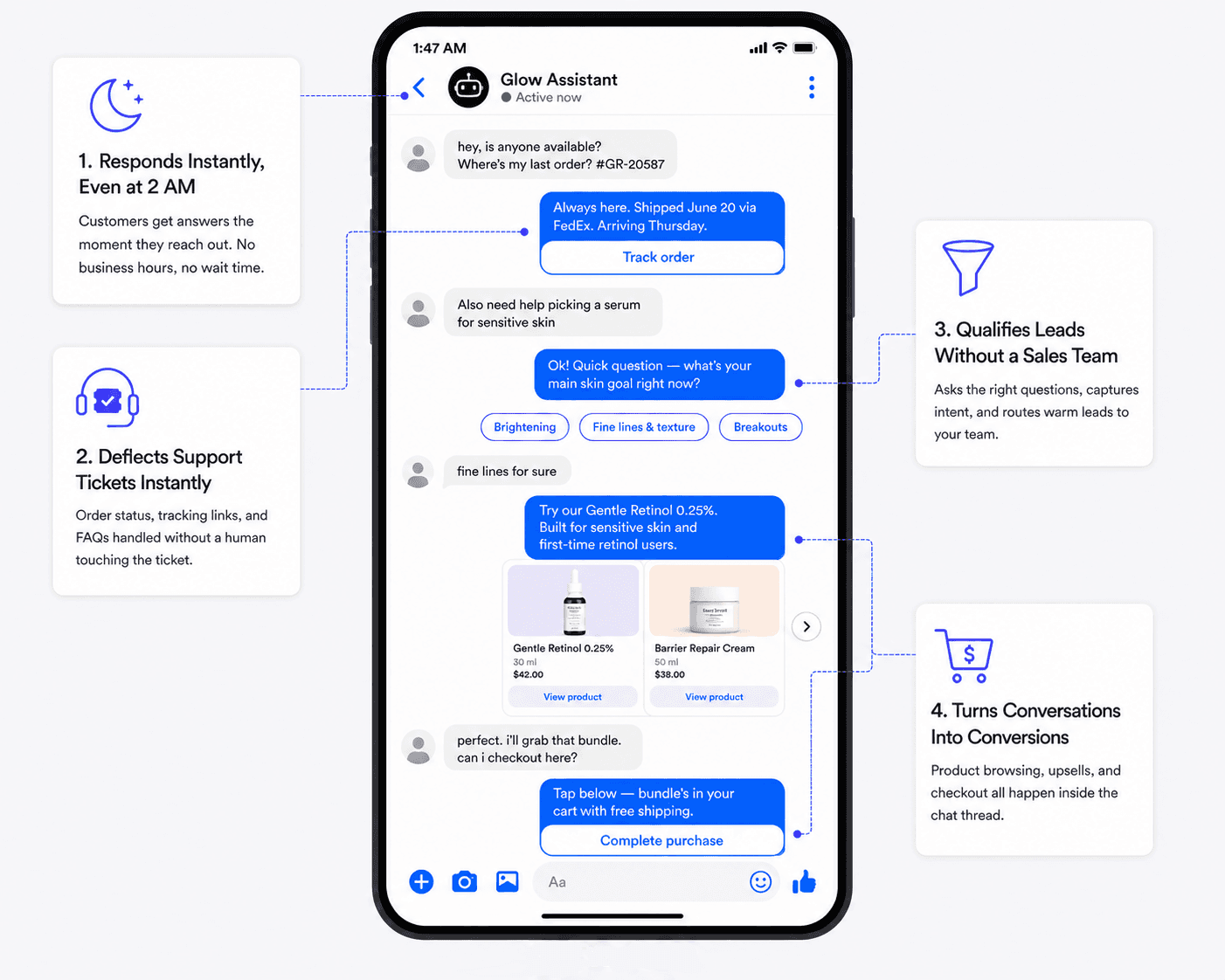
Respond Instantly, Even at 2 AM
Customers don't care about your business hours. They only care about the answers to their question.
A Messenger chatbot meets them the moment they reach out, whether it is 10 AM on a Tuesday or 2 AM on a Saturday.
Siemens Financial Services achieved a significant increase in internal productivity by automating routine interactions. The pattern holds across industries.
Qualify Leads Without a Sales Team on Standby
Can a bot really qualify leads? Better than an unattended inbox, absolutely.
A well-built Messenger chatbot asks qualifying questions, captures contact information (Messenger provides the user's name and profile data automatically), segments by intent, and routes warm leads to your sales team.
Unlike a static landing page form, the chatbot offers a conversation. That difference matters when you are dealing with mobile users who will not fill out a seven-field form.
Cut Support Ticket Volume Without Cutting Quality
Messenger chatbots reduce customer support queries and cut operational costs.
This is because the majority of inbound support messages are repetitive: order status, return policies, store hours, and pricing questions. A chatbot handles these repetitive queries instantly.
When something falls outside its scope, it escalates to a human agent with full context.
Turn Conversations Into Conversions
Messenger is not just a support channel. It is also a sales channel with 40% of all Facebook users shopping from the platform regularly.
Product carousels inside Messenger let customers browse without leaving the chat. Abandoned cart reminders pull buyers back. In-chat checkout links shorten the path from interest to buying intent into a single thread.
For D2C and retail brands running Facebook ads, the chatbot bridges the gap between ad click and purchase in a way that landing pages simply cannot.
Facebook Messenger Chatbot Use Cases Worth Building For
Generate and Qualify Leads Through Conversations: Capture customer interest instantly by asking questions, collecting details, and identifying high-intent prospects, all without forcing users through lengthy forms.
Automate Customer Support and FAQs: Handle common customer queries, provide instant answers, and reduce repetitive support requests with 24/7 conversational assistance.
Recommend Products and Drive More Sales: Help customers discover products, answer buying questions, share recommendations, and guide them from curiosity to purchase.
Book Appointments and Manage Reservations: Allow customers to schedule meetings, make bookings, check availability, and receive confirmations directly inside Messenger.
Send Updates and Re-Engage Customers: Reconnect with existing customers through reminders, updates, promotions, and personalized messages while staying within messaging guidelines.
Collect Customer Feedback and Insights: Gather reviews, run surveys, understand customer preferences, and use conversations to improve products and services.
Provide Personalized Customer Experiences at Scale: Use customer data and conversation history to deliver more relevant responses, recommendations, and support experiences.
Top No-Code Platforms for Building a Facebook Messenger Chatbot
Here's a brief overview of the platforms that can help you build a Facebook Messenger bot with the least amount of hassle:
Platform | Best For | AI Included | Messenger Support | Starting Price |
WotNot | Multi-channel AI deployment | Yes (multi-LLM) | Yes | $29/month |
ManyChat | Marketing automation, funnels | Add-on ($29/mo) | Yes | Free (25 contacts) |
Chatfuel | Meta-channel automation | Yes (GPT-based) | Yes | Free plan (no AI features) |
Tidio | E-commerce + live chat | Add-on ($39/mo) | Yes | Free (50 conversations) |
ChatBot by Text | LiveChat ecosystem | Yes (capped) | Yes | $25/user/month |
WotNot
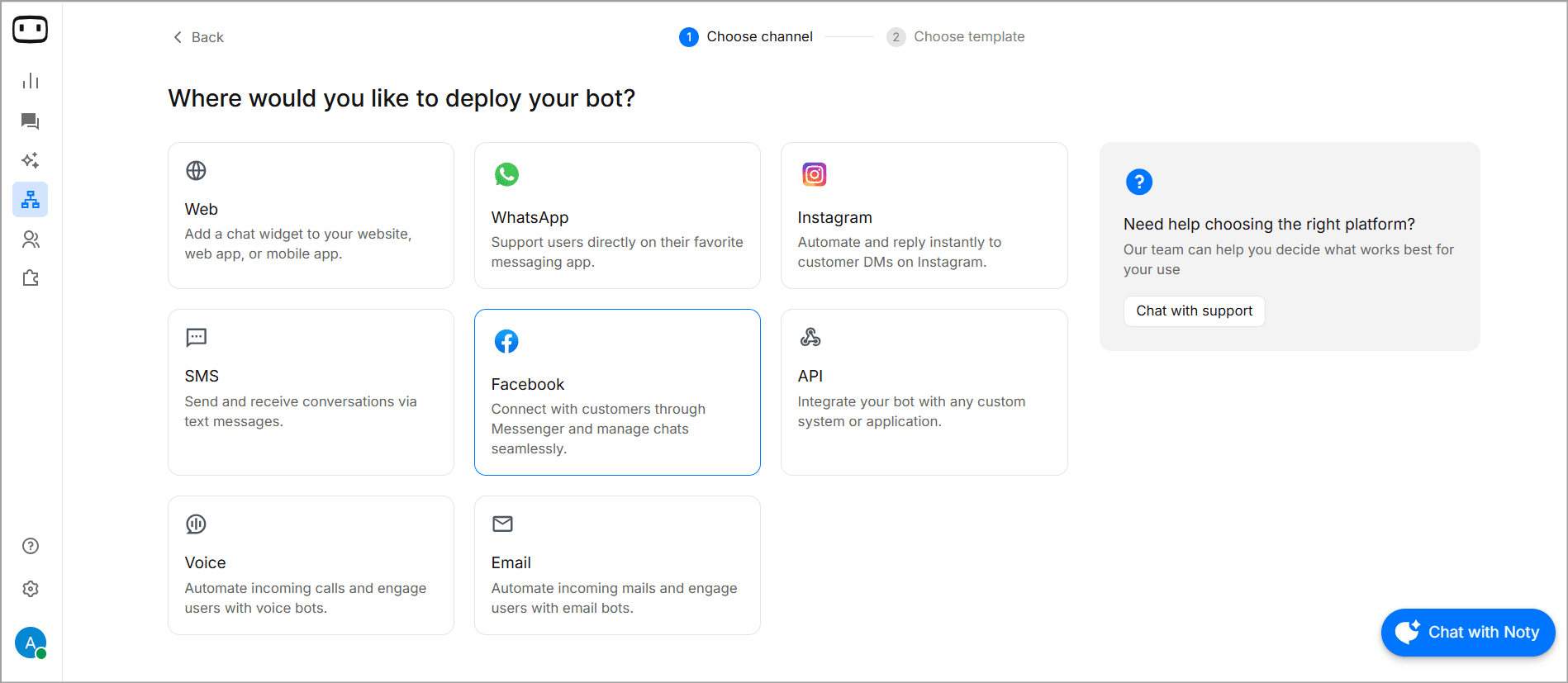
WotNot is a no-code AI agent platform built for teams at SMBs and enterprises who need to deploy chatbots on the web, Facebook Messenger, as well as WhatsApp, Instagram, and SMS.
What makes WotNot stand out is its AI Studio, which supports multiple LLMs and lets you train the bot on your own knowledge base using RAG, then switch models without retraining. The live chat handoff preserves full conversation context, so the agent sees everything the bot collected before picking up.
Pricing: Prices start at $29 per month for one user, which includes 1000 chats and access to the visual no-code bot builder.
14-day free trial, no credit card required.
Start building, not just reading
Build AI chatbots and agents with WotNot and see how easily they work in real conversations.

Start building, not just reading
Build AI chatbots and agents with WotNot and see how easily they work in real conversations.
Start building, not just reading
Build AI chatbots and agents with WotNot and see how easily they work in real conversations.

ManyChat
ManyChat is the most widely adopted Messenger marketing automation platform, with deep roots in Facebook and Instagram comment-to-DM workflows. Like a other no-code builders, it has a visual flow builder that is intuitive.
Additionally, the template library is massive, and it supports Instagram, Facebook Messenger, WhatsApp, SMS, TikTok, and email across its paid plans. ManyChat shines at marketing automation: comment triggers, broadcast sequences, A/B testing, and Shopify integration.
Pricing: ManyChat has contact-based billing. The free plan now supports only 25 active contacts (unique people). Costs scale automatically as your contact list grows. Essential starts at $17/month for 250 contacts, two channels, and only two user seats.
Best for businesses focused heavily on Instagram and Facebook marketing automation with comment-to-DM funnels and broadcast campaigns.
Chatfuel
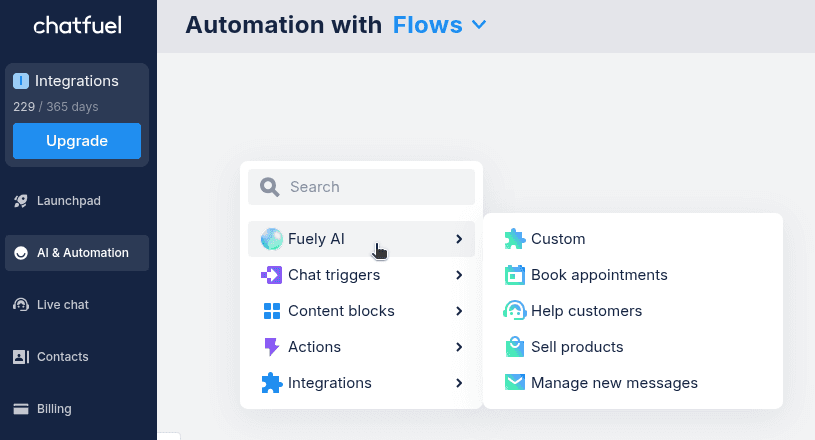
Chatfuel is a no-code chatbot builder built specifically for Meta channels: WhatsApp, Instagram, Facebook Messenger, TikTok, and website widgets.
It has been around since 2015 and powers over a billion messages monthly. Its AI engine (Fuely) runs on GPT models and handles FAQ responses, lead qualification, and appointment booking out of the box.
Pricing: The starting plan for Chatfuel is a free plan, which comes with Meta-channel automation, shared inboxes, and flow builders. The second and only paid plan, AI Pro, costs $69 per month and comes equipped with all the AI capabilities.
Best for businesses primarily operating on Meta channels (especially WhatsApp and Instagram) that want built-in AI without needing to connect external models.
Tidio
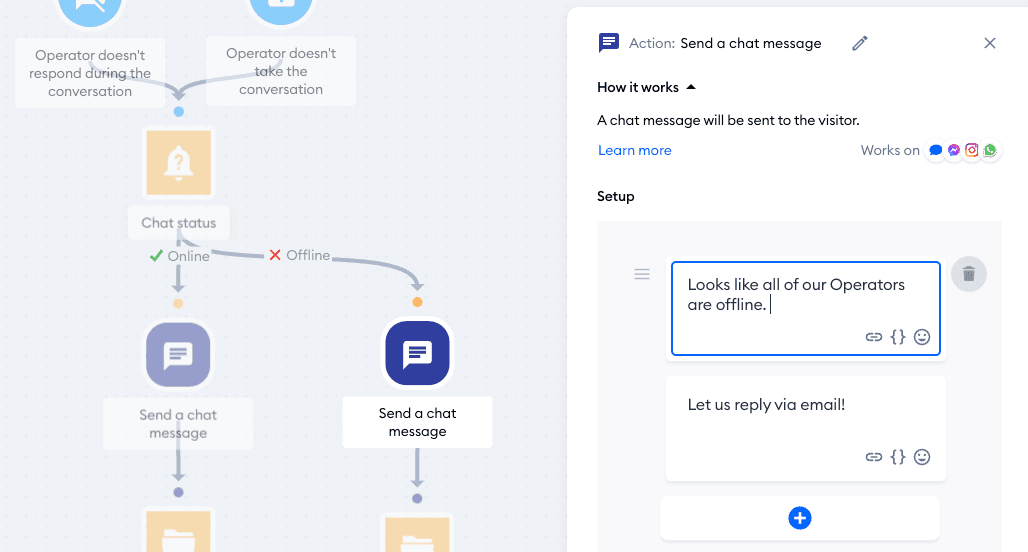
Tidio is a customer communication platform that combines live chat, AI chatbots (Lyro), a help desk ticketing system, and multichannel messaging in one dashboard. It supports Facebook Messenger, Instagram, WhatsApp, and email, and is particularly popular with Shopify stores. The Lyro AI agent can learn from your help center content and generate responses using NLP.
Pricing: The free plan offers 50 conversations per month. Starter is $29/month for 100 conversations, and Growth is $59/month. But here is the catch: Lyro AI is a separate add-on starting at $39/month for 50 AI conversations, so a Starter plan with meaningful AI actually costs $68/month or more.
Best for e-commerce businesses already on Shopify that need a unified live chat and chatbot solution with a built-in help desk.
ChatBot by Text
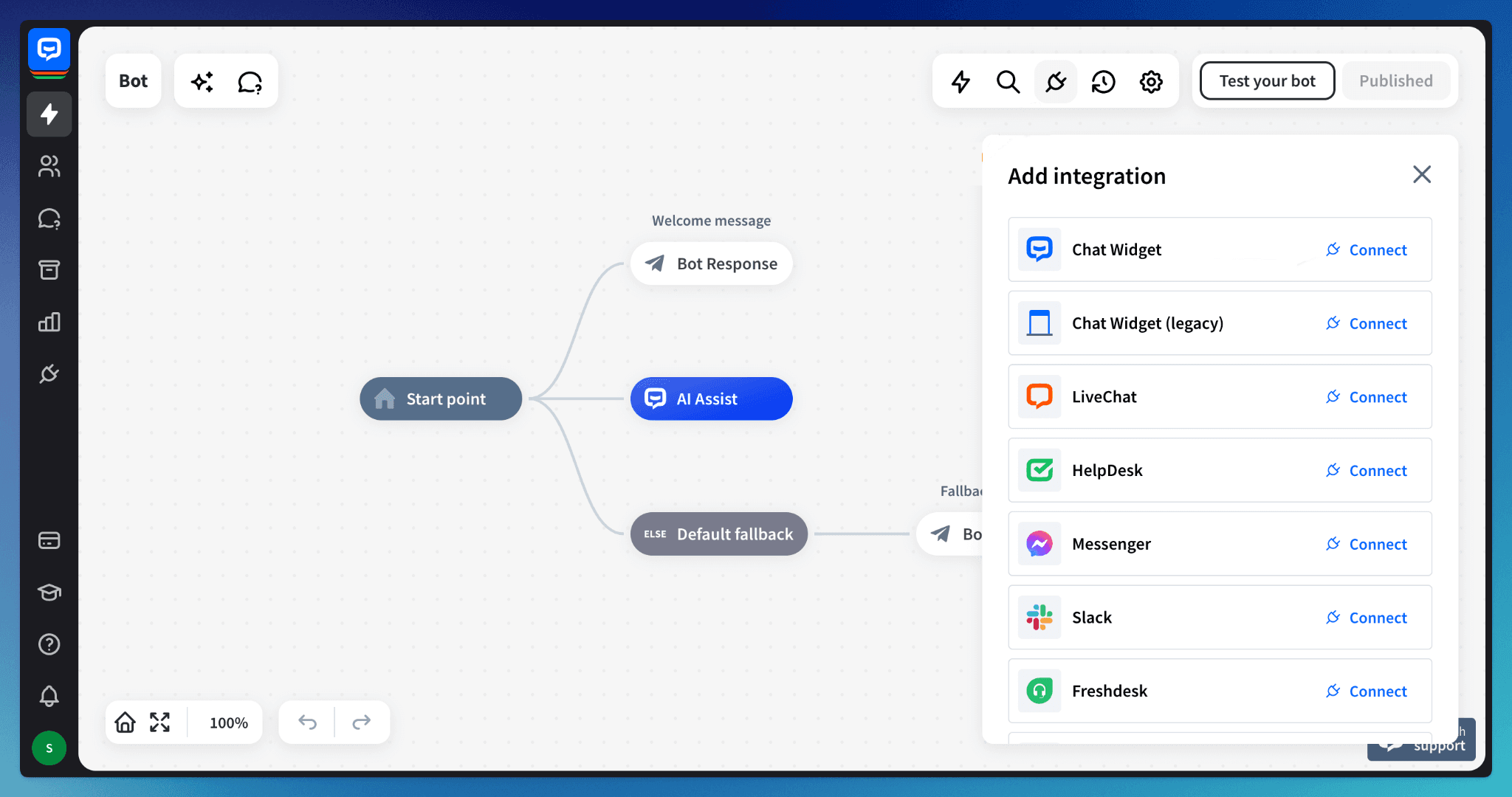
ChatBot is the chatbot arm of the LiveChat ecosystem. It offers a no-code builder with a native Messenger integration, AI agents that resolve queries contextually, and out-of-the-box connections with Shopify, WordPress, Slack, and Zendesk.
Pricing: The Essential plan starts at $25/month (monthly billing) but includes only 10 AI resolutions per month, which is almost unusable for any active business.
Best for businesses already in the LiveChat/Text ecosystem that want tight integration between their live chat tool and Messenger chatbot, and whose volume fits within the resolution caps.
How to Build a Facebook Messenger Chatbot (Step by Step)
The build itself is the easy part. The decisions you make before and during the build, what the bot should handle, how it should escalate, what it should capture, that is what determines whether the chatbot actually works or just exists.
Step 1: Connect Your Facebook Business Page
To create a Facebook Messenger chatbot, regardless of using any builder, you need to have a Business Page with admin access.
Log into your chatbot platform (this walkthrough uses WotNot as the demo, but the general flow applies across platforms), navigate to the integrations or channels section, and connect your Facebook Page. You will need to authorize Messenger permissions through Meta's OAuth flow.
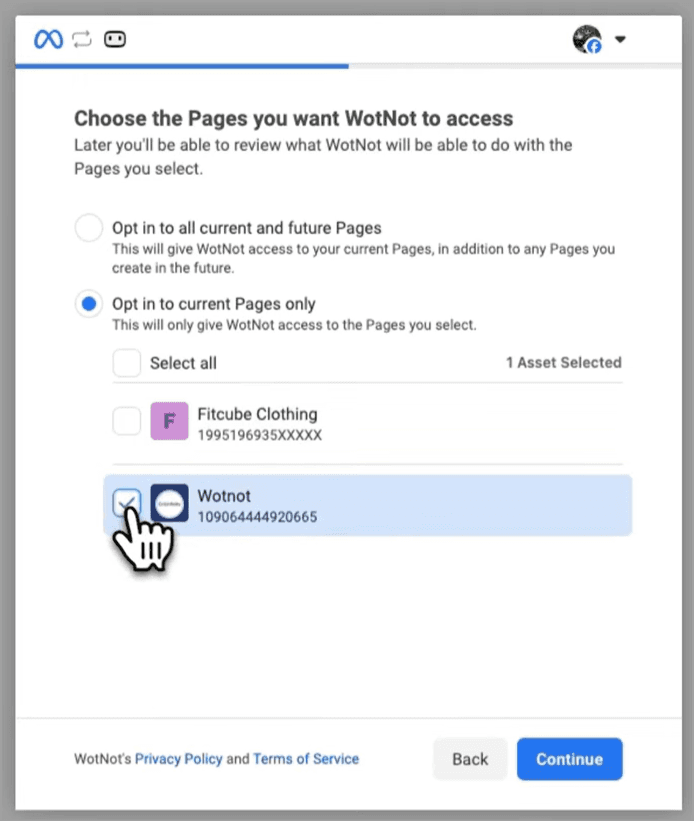
If your business has not been verified through Meta Business Suite yet, you may need to submit documentation. This process takes 2 to 7 business days so plan for it beforehand.
Step 2: Define What Your Bot Should Handle
Before you build a single flow, answer three questions.
What are the five most common questions your team answers every day?
What should the bot do when it does not know the answer?
What information should it capture from every conversation?
Pull your last 30 days of Messenger messages (or support tickets) and sort by frequency. That list is your bot's job description. Everything else is scope creep for version one.
Step 3: Build Your Conversation Flows
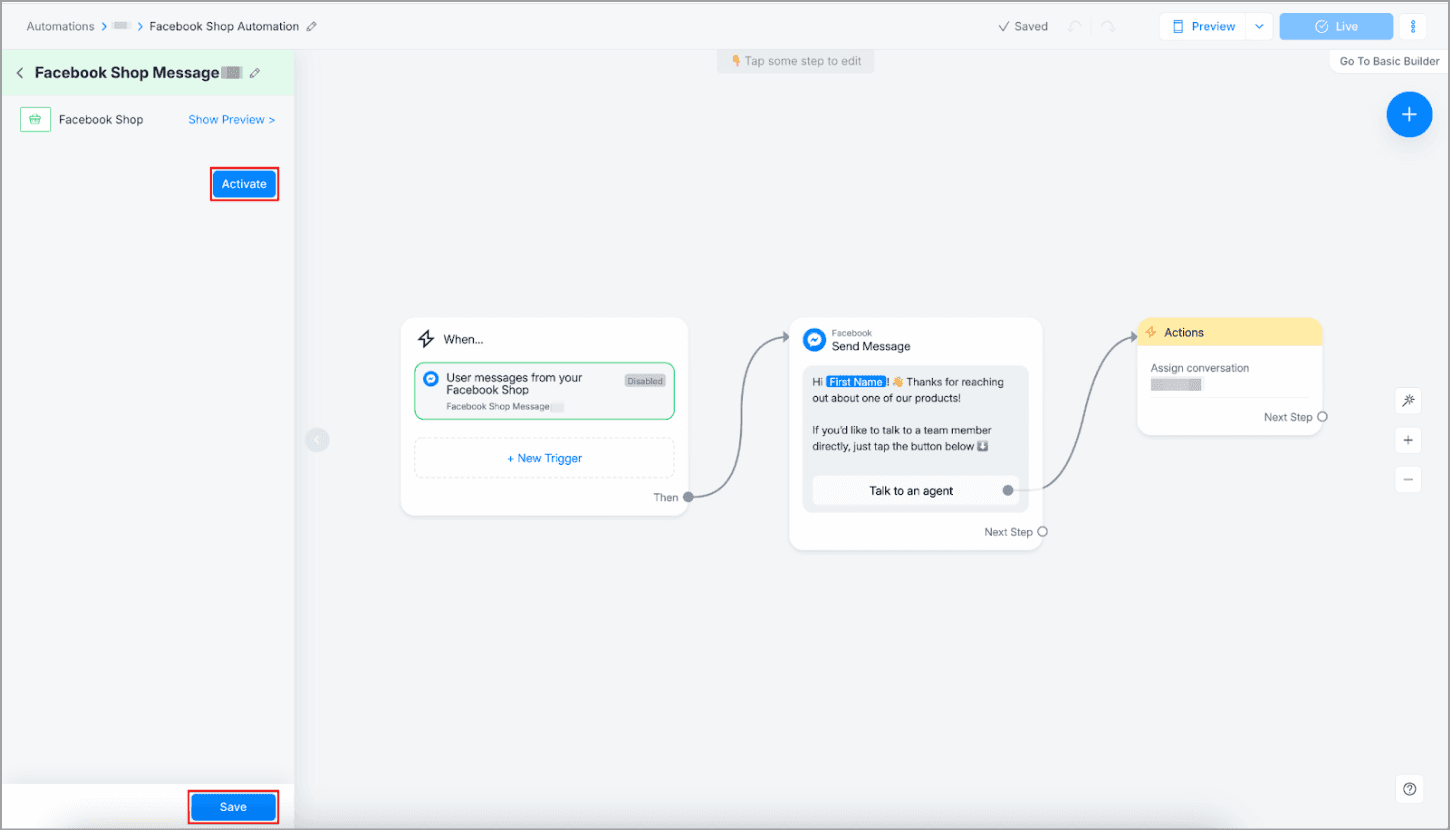
This is where the bot takes shape. In WotNot's bot builder, you can use a template (lead generation, customer support, appointment booking) or build from scratch using the drag-and-drop flow editor.
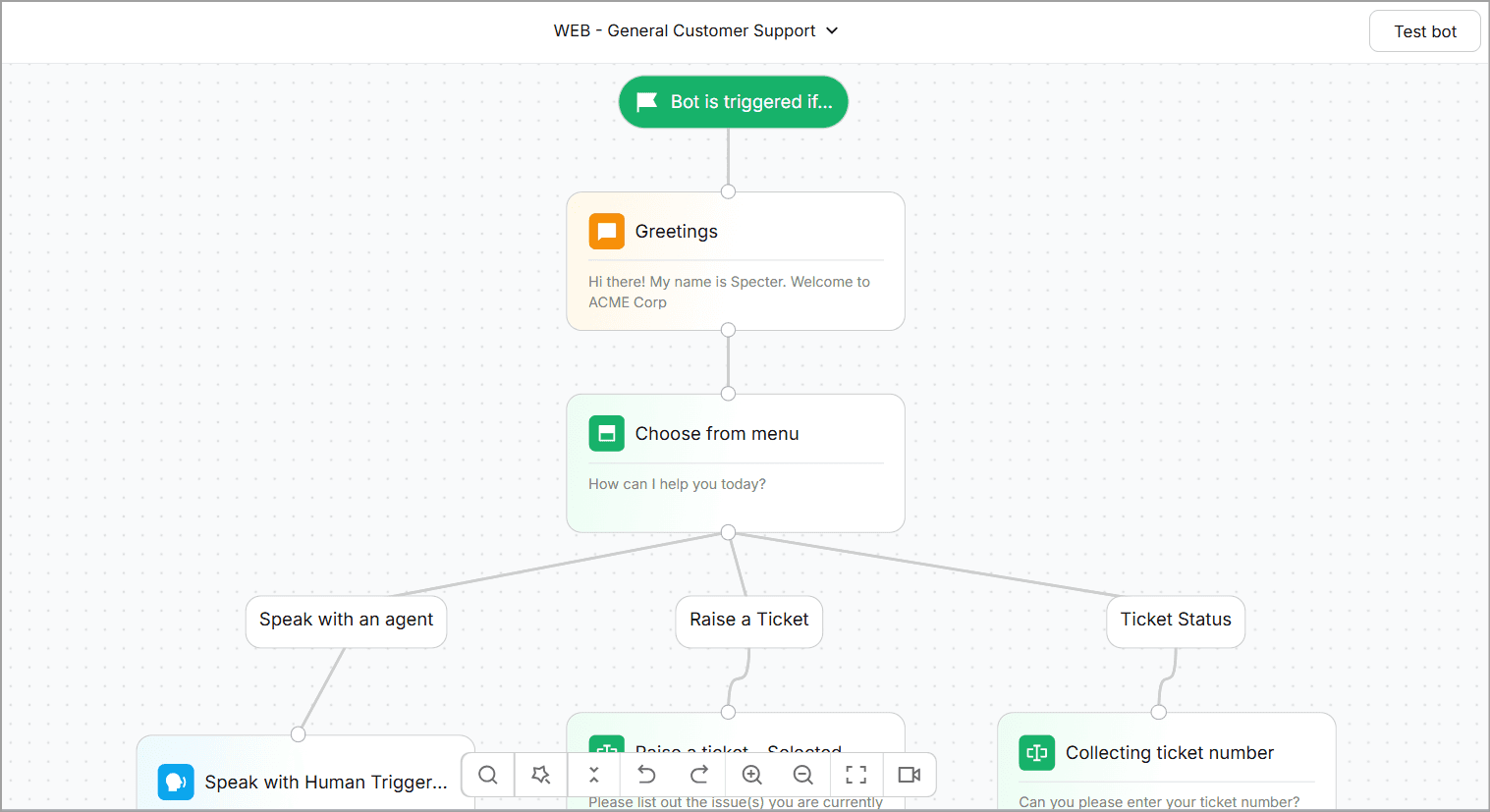
Most platforms offer chatbot templates for Facebook Messenger that cover the most common use cases, so you are not staring at a blank canvas. You can check out these chatbot scripts to understand just how a conversation flow is created from scratch.
Set up a welcome message with quick-reply buttons, build branching logic for each use case, and use the AI Agent block for open-ended questions that do not fit predefined paths. Test every branch. Not just the happy path.
Test each branch end to end. The goal is not just that the happy path works. The goal is that every path works, including the ones where the user says something unexpected.
Step 4: Set Up Human Handoff
This is the step most first-time bot builders skip. And it is the step that makes or breaks the experience.
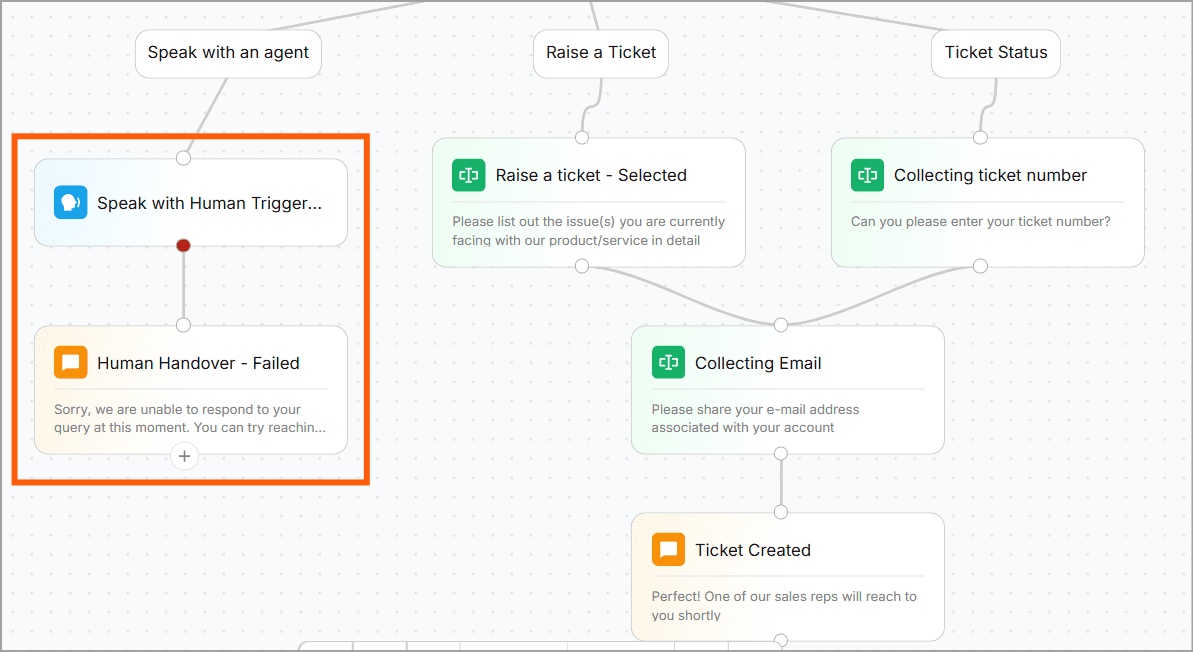
Configure live chat as a fallback. When the handoff triggers, the agent should see the full bot history, detected intent, and collected data. The best ones recognize when they have hit their limit and get a real person involved.
Step 5: Test and Deploy
Most Messenger users are on their phones and the desktop experience and the mobile experience are not identical. So make sure to test vigorously for both experiences.
When everything holds up as expected during testing, make the bot live.
Monitor the first few days closely. Track completion rates, drop-off points, and the queries your bot cannot handle. Those unhandled queries are your roadmap for the next iteration.
Set a recurring check: weekly for the first month, biweekly after that. The data from real conversations is more valuable than any pre-launch assumption.
If you want to create and deploy chatbots for the other platforms of Meta, check out the complete guides to them:
Mistakes That Break Most Facebook Messenger Chatbots
I have seen enough first Messenger deployments go sideways to know exactly where they break. It is almost always one of these.
Building too much on day one:
You want to have a bot that handles everything. But complex flows built before validating the basics lead to brittle bots that fail at the edges. Start narrow. Expand based on data.
No human handoff:
If there is no clear path to a live agent and your bot fails at any point of time, customers who get stuck will not try again. They will leave. So make sure to design an out for the chatbot so the human can enter the chat.
Ignoring Meta's messaging policies:
Messenger has a 24-hour standard messaging window. After a user's last interaction, you have 24 hours to send a response. Beyond that, you need approved message tags (for specific use cases like shipping updates or account alerts) or sponsored messages.
Broadcasting promotional content outside this window gets pages restricted. The Reddit community is full of stories about businesses that lost Messenger access because they treated the channel like email. The rules are stricter, and enforcement is real.
Not testing on mobile:
If you only tested on a desktop, you should also test for mobile UI. Carousels render differently on mobile, button text gets truncated, and quick replies that look fine on a 27-inch monitor become unreadable on a phone screen.
Messenger is a mobile-first channel, so test accordingly.
Not updating it after deployment:
You can’t just set up a messenger chatbot and forget about it. No amount of training and testing can prepare a bot for real-life scenarios. So it’s important that you monitor its performance and keep strengthening it from the observations and data.
Your Messenger Chatbot Is Closer Than You Think
The operational work, scoping the right questions, testing every flow, and monitoring real conversations, is harder than the build itself.
But the build takes no more than an afternoon on a no-code platform.
You do not need a development team. You do not need a massive budget. You need a clear understanding of what your business asks for, a platform that connects to Messenger, and the willingness to iterate based on what the data tells you.
After working with hundreds of chatbot deployments, the pattern I see most often is this: teams overthink the first version and don't think enough about the reiterations.
The first version does not need to be perfect. It needs to be live, collecting data, and handling the five questions that make up 80% of your volume.
WotNot's free trial lets you connect your Facebook Page and build your first Messenger chatbot for business without writing a line of code.
Start small. You will be surprised how far a simple bot can take you.
FAQs
FAQs
FAQs
What is a Facebook Messenger chatbot?
How do I create a chatbot for Facebook Messenger for free?
What is the best chatbot platform for Facebook Messenger?
Can a Messenger chatbot work with Instagram DMs too?
Do I need coding skills to build a Facebook Messenger chatbot?
ABOUT AUTHOR

Hardik Makadia
Co-founder & CEO, WotNot
Hardik leads the company with a focus on sales, innovation, and customer-centric solutions. Passionate about problem-solving, he drives business growth by delivering impactful and scalable solutions for clients.

Start building your chatbots today!
Curious to know how WotNot can help you? Let’s talk.
Start building your chatbots today!
Curious to know how WotNot can help you? Let’s talk.


